

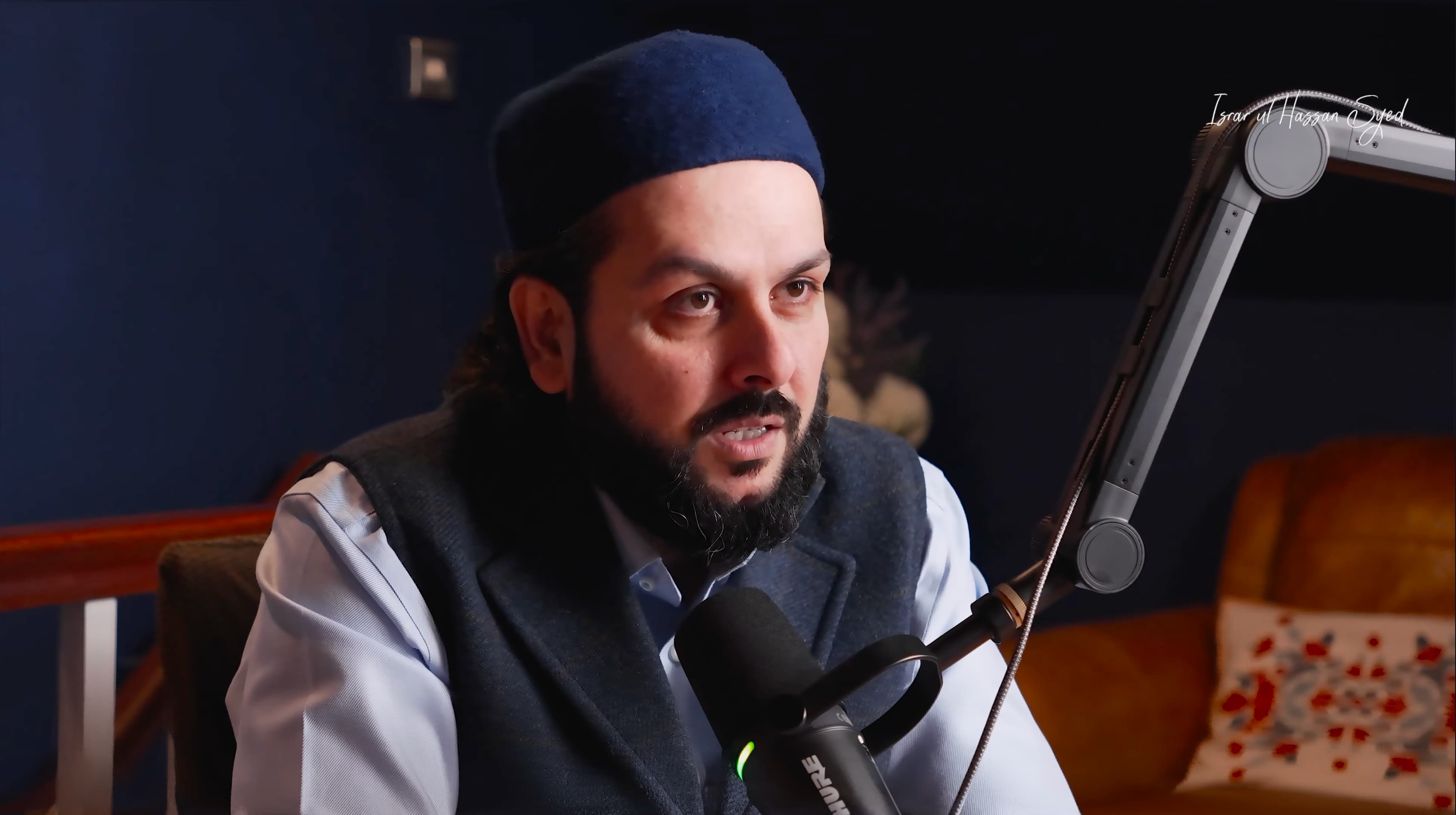
Purpose is not found. It is revealed.
The standard advice on finding your calling tends to divide into two camps. Follow your passion, say some. Be strategic, say others: find what you are good at and build from there. Barrister Israr's position is more nuanced and, ultimately, more honest about how most people actually arrive at the thing they are meant to do.
You do not know in advance. You find out through elimination.
The advice he received from a teacher at a critical moment was simple: do not chase passion, because passion fluctuates. Do not simply chase opportunity, because not every open door is yours. Find out what you are genuinely good at, through trying things, failing at things and ruling things out, and pursue that. Because competence sustained over time becomes something more than skill. It becomes identity.
What makes his framing worth taking seriously is that he applies it to his own story without flattering himself. His undergraduate degree was in philosophy. He went on to law. For a while he thought he should be doing something else entirely. He practised, built, contributed, and it was only in retrospect that the thread connecting all of it became visible. The legal training did not feel like the point at the time. Now he can see how it prepared him for everything that followed.
This is the part most people miss when they think about purpose. It rarely announces itself clearly at the start. More often it reveals itself through the accumulation of what you have done, including the things that seemed like detours. The detours are frequently the preparation.
He is also direct about one of the least discussed pressures in professional life, particularly in medicine. To reach a meaningful level of seniority takes the better part of a decade. That is not a criticism. It is simply a fact that deserves to be named. Choosing a path that long before you have any real self-knowledge is a genuine risk. But his view is not pessimistic. Even if you get halfway down a road and realise it is not the right one, you still have most of your life ahead to do something else. The worst response to that moment is despair. The right response is a decision.
On judging things you have never been inside
A significant portion of the conversation concerns a question that sounds narrow but opens into something universal: why do so many people write off whole countries, communities or institutions based on almost no direct experience of them?
The argument Barrister Israr makes is not sentimental. It is epistemological. How many politicians from a given country do you actually know? How many situations there do you have intimate, first-hand knowledge of? And when you form an impression of a people based on the behaviour of a handful of individuals, who is actually forming that opinion: you, or the thing you have allowed to influence you?
He draws a distinction that extends far beyond questions of national identity. When something makes you angry, he asks, who has the power in that moment? You, or the thing that provoked you? If it is the latter, you have handed your power over. Your reaction belongs to something else. Most of the strong opinions people hold about places, institutions, professions and communities are assembled in exactly this way: built from second-hand impressions, filtered through the behaviour of others, never tested against direct experience.
The broader principle matters enormously for anyone in a field as complex as healthcare. Judgements about patients, communities, systems and colleagues made from the outside, assembled quickly and without genuine contact, are almost always incomplete. The discipline of suspending that kind of judgement, of staying curious and present long enough to form an opinion actually worth holding, is one of the things that distinguishes good clinicians from average ones. Barrister Israr frames it as a general human failure. But it is a particularly consequential one for people who will spend their working lives making decisions about other people's lives.
The loneliness nobody is naming
There is a passage in the conversation where Barrister Israr describes riding the underground in London after several years away from it. Almost nobody made eye contact. Everyone was in their phone or sealed inside their own thoughts. He describes it without drama: that is loneliness. When there is no connection, that is what loneliness looks like. It does not require isolation. It can happen in a packed carriage.
He believes this disconnection is the defining crisis of the current moment, not information overload, not political division, not even the erosion of institutions, though all of those things are real. The deepest problem is the loss of genuine human contact: with other people, with community, with any sense of what we are actually here to do.
He has at times delivered an extraordinary volume of speaking engagements whilst navigating serious personal difficulty that he does not ask to be discussed at length. What keeps him going, he says, is not willpower in any conventional sense. It is the conviction that struggle is universal. Knowing that other people are carrying their own weight makes yours feel less singular. Not lighter, exactly. Less isolated.
He links resilience directly to connection, and connection directly to having something beyond yourself that you are committed to. People who have made a real decision about what they are doing with their life, who have clarity even imperfect clarity about their direction, tend to absorb difficulty differently from those who have not. Not because they suffer less. Because the suffering has somewhere to go. It sits inside a larger story rather than overwhelming it.
The word that changes how you think about focus
The most practically useful moment in the conversation is a small etymological observation that lands with surprising force.
The Latin root of the word distraction means, essentially, to be pulled apart: drawn in multiple directions simultaneously until coherence breaks down. The closest modern equivalent, Barrister Israr notes, is something approaching insanity. Not clinical insanity. But the experience of a mind that cannot hold a single thing still long enough to properly engage with it.
Sit with that for a moment. If distraction is a form of insanity, if the scattered, notification-driven, perpetually interrupted state that most people now inhabit as their baseline is actually a departure from normal functioning rather than the new normal, then the work of becoming focused is not self-improvement. It is recovery. It is a return to something.
His decision-making framework begins before any of its steps. It begins with the elimination of distraction. Not the management of it. The elimination. Because the person who has not done that work will make decisions that feel real in the moment and dissolve under pressure. They will keep returning to the same crossroads, asking the same questions, never quite committing. And they will mistake that paralysis for thoughtfulness.
This matters for any student navigating application cycles, career choices and the relentless pressure of social comparison. The problem is rarely a shortage of options. It is the inability to be still enough, for long enough, to actually hear your own answer.
Time is the only currency
Barrister Israr returns several times throughout the conversation to the same idea: that time is the only thing of real value any of us possess. Not money. Not status. Not credentials. Time, and the question of what we spend it on.
He tells the story of a friend whose working hours shifted, and who only then realised how many evenings he had been missing with his children. Not through any failure of character or love, but because the system was designed, his word, to make that the default. To consume the hours in which connection would otherwise happen. To make the relentless pace feel like the only possible way to live.
His view is not that the system should be dismantled. It is that each person has to make a deliberate choice about how they are going to live within it, or outside it. The people who never make that choice do not escape the system's defaults. They simply live inside them unconsciously, arriving decades later wondering why they feel hollow despite having built everything they were told to want.
What he is asking, in the end, is a very simple question dressed in careful thinking: have you decided? Not which career to pursue, or which city to live in, or what the next five years look like. Have you decided, fundamentally, what this life is for? Because without that anchor, everything else, the distraction, the comparison, the anxiety, the drift, fills the space where the answer should be.
He does not say this as a rebuke. He says it as someone who found his own answer late, through many wrong turns, and who now has the clarity that only comes from having genuinely searched. The searching, it turns out, was not wasted time. It was exactly the preparation the answer required.


.svg)
.svg)

.svg)