
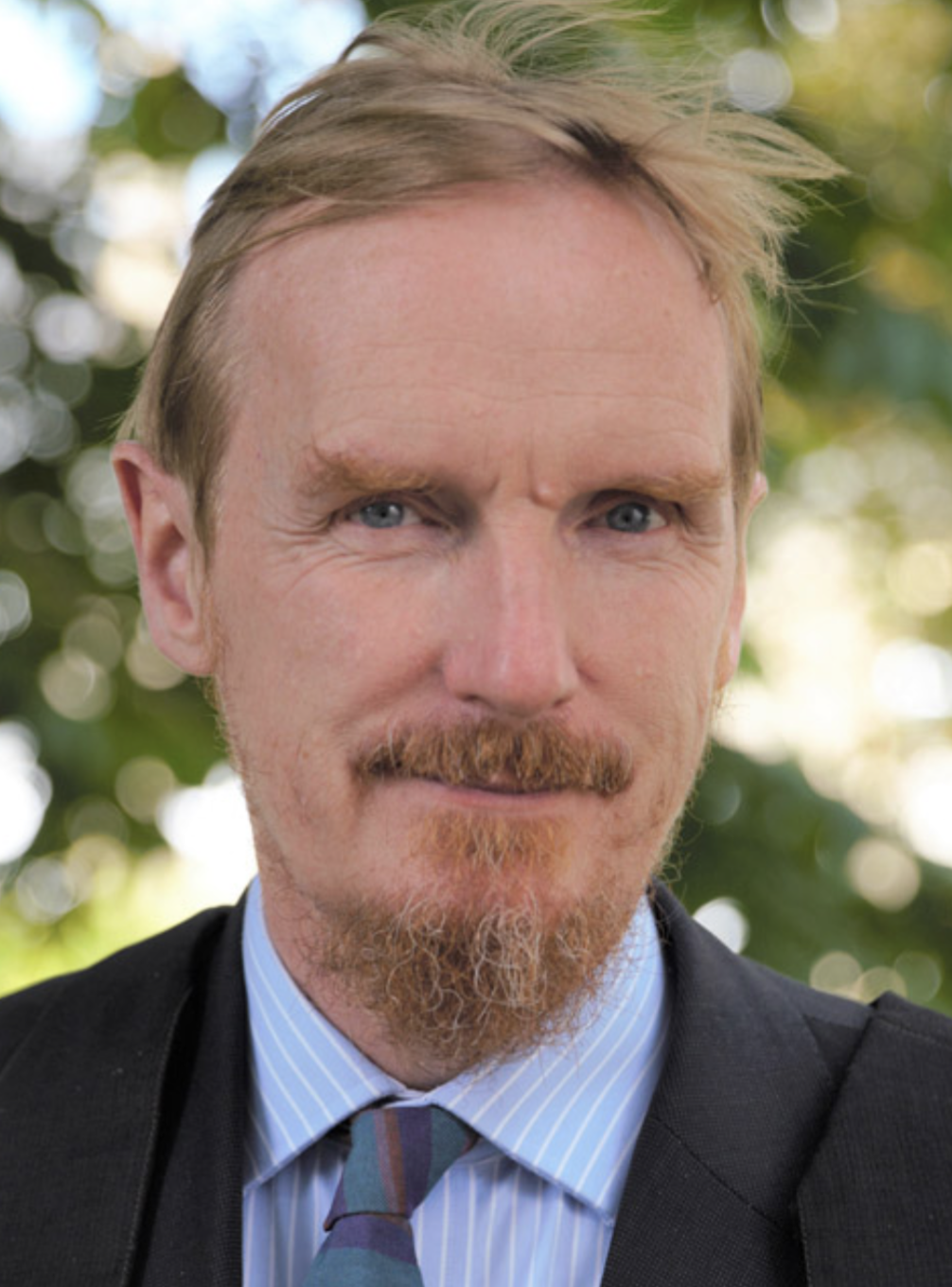
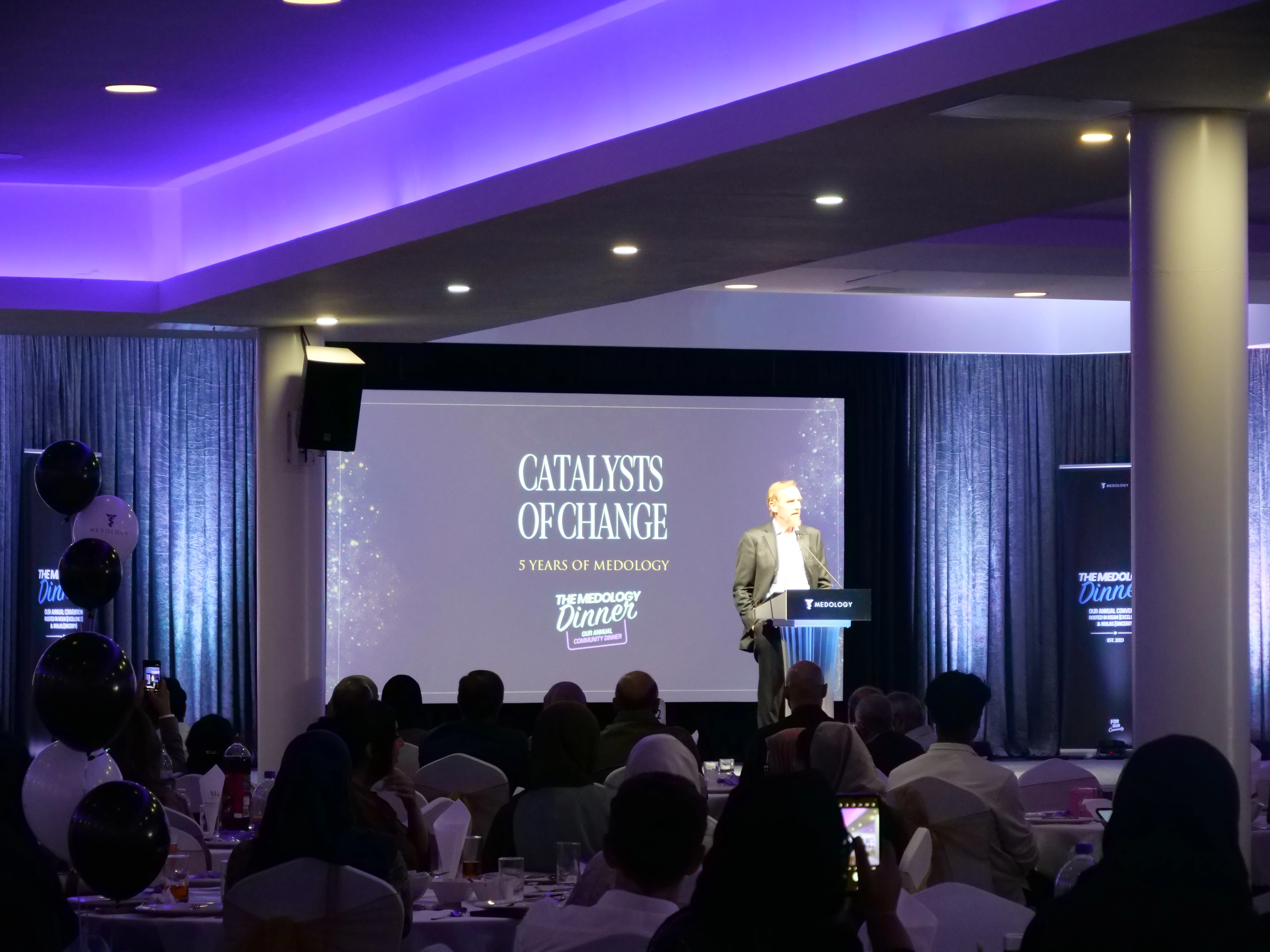
There is a version of medicine that is very good at making people comfortable. Better drugs, longer lives, improved protocols, smoother pathways through the system. By almost every measurable indicator, we are better at keeping the body alive than at any point in human history. Professor Timothy Winter's question is whether any of that is sufficient, and whether the medical profession, in its drift towards the purely physiological, has quietly abandoned the part of the human being that most needs attending to.
Professor Winter is not a clinician. He is the Dean of Cambridge Muslim College, one of the most widely cited Islamic scholars in the English-speaking world, and a thinker whose intellectual range extends from philosophy and neuroscience to ecology and the history of civilisation. He addressed the Medology Annual Dinner with a provocation that went largely unrefuted, because it is very difficult to refute: that a medicine which has no account of the inner life of its patients is not really medicine at all. It is very sophisticated maintenance.
The crisis medicine is not talking about
The dominant strand of contemporary thought, the one running from Silicon Valley through academic neuroscience to the technology industry's most prominent founders, holds that human consciousness is at bottom just neurons firing. A biological mechanism, replicable in principle, improvable in practice, and ultimately destined to be superseded by something that does not get tired, does not forget and does not die.
Ray Kurzweil, a senior figure at Google, has said publicly that he expects to live long enough to have his intelligence uploaded to the internet. Sam Altman has spoken openly about the genuine risk of an artificial general intelligence whose interests and values do not align with those of its human creators. These are not fringe positions. They are the operating assumptions of some of the most powerful and well-funded institutions on earth. And their implications for medicine, for what a doctor is actually doing when they sit across from a patient, are almost entirely unexamined.
If the human being is nothing more than a biological container for consciousness, then the entire enterprise of medicine is essentially maintenance. Keep the hardware running as long as possible. Manage the pain. And when a better substrate for consciousness becomes available, step aside gracefully.
Professor Winter does not accept that account. His objection is not only philosophical. It is clinical. The most intractable problems medicine faces globally, depression, anxiety, addiction, the epidemic of young people who cannot function, the vast numbers of working-age adults out of work due to health conditions, are not primarily problems of biology. They are problems of meaning. Of purpose. Of disconnection from anything that makes the suffering feel worth enduring. A medicine with no framework for engaging those things will continue to fail the people most in need of its help.
The mental health crisis and its actual cause
Professor Winter's diagnosis of the global mental health crisis cuts against the grain of how it is usually framed. It is not primarily a crisis of brain chemistry, he argues. It is a crisis of narrative.
Human beings suffer profoundly when told, explicitly or implicitly by the culture they inhabit, that they come from nowhere, are built for no particular purpose and are going nowhere after death. That the most honest account of their inner life is a set of electrochemical signals. That the future belongs not to them but to the machine. In the midst of material plenty, with longer lives and more entertainment than any previous generation could have imagined, they feel hollow. And the rate at which that hollowness is translating into clinical crisis is accelerating, in every country where this cultural story is dominant.
The pharmaceutical response to this, the managed sedation of distress through medication, is not in his view the answer. It is the medical equivalent of adjusting the lighting in a room that has no windows. You can make the artificial light more comfortable. But you have not given the person daylight.
What the clinical literature consistently shows, and this is not a religious assertion but an empirical one, is that a sense of meaning and spiritual grounding, across traditions and populations, is one of the strongest predictors of positive mental health outcomes. Not because it resolves material suffering, but because it provides a frame within which suffering can be understood, metabolised and, at times, transformed. A clinician who has no framework for engaging with that dimension of a patient's life is working with an incomplete model of a human being. Incomplete models produce incomplete care.
What neuroscience accidentally confirms
One of the most striking passages in Professor Winter's address concerns memorisation, and what a study of London taxi drivers inadvertently revealed about the brain.
To obtain a London taxi licence, drivers must pass what is called the knowledge: the memorised locations of tens of thousands of streets within a wide radius of the city centre. It takes approximately two years of intensive study. When neuroscientists scanned the brains of qualified drivers, they found something unexpected. The hippocampus, the region of the brain most associated with memory, was measurably larger in taxi drivers than in the general population. A larger hippocampus is also associated with significantly better mental health outcomes.
The implication is not that memorising street maps cures depression. It is that the brain appears to be shaped for deep, sustained, embodied engagement with the world. When it is given that kind of engagement, it functions better across every dimension. The default mode of contemporary life, passive consumption, fragmented attention, constant digital interruption, is not what the brain was built for. The accumulated cost of that mismatch is showing up in clinical settings all over the world.
Professor Winter makes this argument without any religious framing. It stands entirely on its own scientific terms. The human brain is optimised for conditions that modern life systematically denies it: physical activity, deep memory, natural rhythms, sustained attention. The result is a species that is technically prospering and experientially unwell.
Body and soul are not separate problems
The most directly clinical argument in the address concerns the mind-body relationship and its implications for how medicine is actually practised.
Institutional medicine has tended to treat the psychosomatic as an awkward edge case, something to be referred elsewhere or acknowledged briefly before returning to the presenting complaint. But the evidence does not support that separation. Anxiety and depression have measurable effects on digestion, immunity, skin and cardiovascular function. Chronic loneliness accelerates biological ageing at a cellular level. The quality of a patient's relationships, their sense of meaning, their capacity to locate themselves inside a story that goes somewhere, all of this bears directly on clinical outcomes in ways that no medication alone can address.
Professor Winter is not asking future doctors to become therapists or spiritual counsellors. He is asking them to carry into every consultation an account of the human being large enough to include these things. To see the person in front of them as more than a set of presenting symptoms. To bring to the encounter the quality of regard, the sense that this person is irreducibly significant beyond what any scan or blood panel can capture, that actually characterises great clinical care everywhere in the world.
This is not a mystical claim. It finds empirical support in research on placebo effects, in studies on recovery outcomes, and in the consistent finding that the single strongest predictor of patient satisfaction is whether they felt truly listened to. Not correctly diagnosed. Listened to.

Why this moment is different from every previous one
Professor Winter is not hostile to technological change, and he does not romanticise the past. But he is insistent that the current convergence of artificial general intelligence, genetic engineering, neurotechnology and transhumanist ambition represents something qualitatively different from all previous industrial revolutions. For the first time in the history of human thought, the human body itself is in question. Not our tools. Not our social arrangements. The biological substrate of personhood.
If the most prominent voices in the technology industry are correct that the biological basis of consciousness is an evolutionary accident soon to be superseded, then medicine is in the business of maintaining a platform that its most powerful patrons have already written off. If they are wrong, if there is something about embodied human life that cannot be replicated and something about the interior of a person that resists reduction to mechanism, then medicine's task is precisely to protect and honour that thing.
A doctor who approaches the patient as a person, irreducible, interior, mortal in a meaningful sense, will practise differently from one who approaches them as a biological system to be optimised. The former will ask different questions, listen differently, and be alert to dimensions of the patient's experience that the latter will simply not see. That difference is not a matter of philosophy. It shows up in outcomes.
That is the provocation Professor Winter leaves with every clinician in the room. Not to resist technology, not to retreat from science, but to carry into their practice a conception of the human being large enough to survive the age they are entering. The technical skills will develop. The examinations will pass. The years of training will end. What will remain, and what will determine whether they become truly good doctors, is the quality of regard they bring to the person across the desk.
Whether or not the machines eventually exceed us in intelligence, they will not exceed us in that. And that is where medicine ultimately lives.


.svg)
.svg)

.svg)