
Why the safe path felt like a ceiling
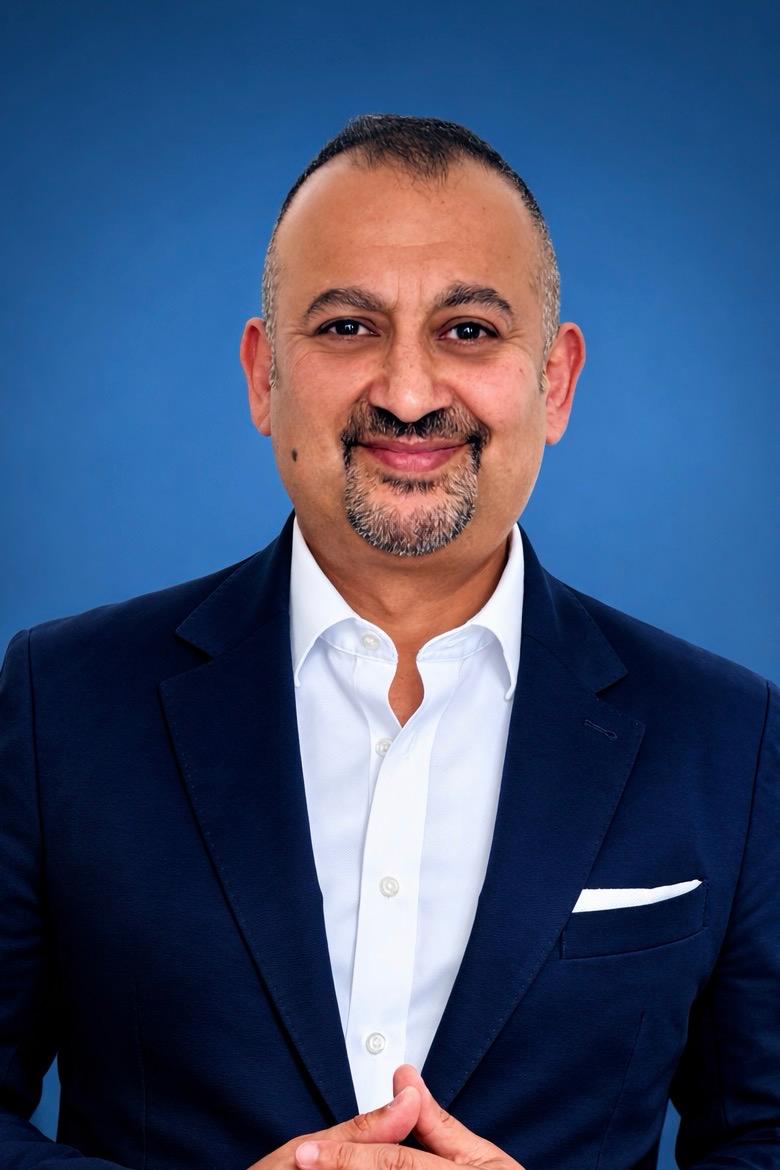
Dr. Masood traces the instinct back further than medicine. His father was an aircraft engineer. Growing up, there were always things being fixed, taken apart, understood from the inside. A curiosity about how things work, and more specifically why they do not, that never really left him.
When he entered medicine, he found a career with a clear structure and a great many unasked questions. The structure suited some people perfectly. For him, it started to feel limiting the moment he realised he could operate at a different scale. His involvement with the junior doctors' committee was not political positioning. It was about leverage. One doctor and one patient at a time had its own meaning. But a negotiator representing a generation of junior doctors in a national contract dispute could move something larger.
He describes learning what he calls principal negotiation, the idea that the goal is not to win while the other side loses but to find an outcome both parties can own, as one of the most transferable things his career ever taught him. It is a skill that looks like compromise from the outside and looks like strategy from the inside. It has followed him into every role since.
The move into technology was the one that raised eyebrows. Healthcare software is a world of its own. Engineers think differently, speak differently, value different things. He walked into a senior role managing a large part of the organisation without having come from that world. His approach, looking back, was characteristically direct: he acknowledged what he did not know, learned fast, and built trust through demonstrated competence rather than credentials. He describes the process plainly. You commit to the role, you develop the capability, and you know you have genuinely arrived when people stop asking you to prove yourself and start asking your opinion on things you were never hired for.
Rejection is not the same thing as failure
One of the most important ideas in the conversation is Dr. Masood's distinction between rejection and failure. He is insistent that these are not the same thing, and that treating them as equivalent does serious damage, particularly to students navigating the pressures of medical and healthcare education.
Rejection, in his framing, is feedback. It means the timing was wrong, or the path needs adjusting, or something else is waiting. It is not a verdict on a person's worth or potential. Failure is something different entirely. It is the decision to stop. Which means, by his logic, that as long as you keep moving you have not failed. The only way to truly fail is to give up on the question.
He did not get into medical school on his first attempt. He walked away from the specialty he had planned to pursue. He has been turned down for things he wanted. He talks about all of this with the ease of someone who eventually internalised that those moments were part of the shape of things, not interruptions to it. It took years to get there. He does not pretend otherwise.
What he says consistently, to students and to anyone willing to listen, is that resilience is not a personality trait you either have or do not have. It is something built in the hard moments, not around them. The students who come out of a difficult period with more self-knowledge than they went in with are, in his experience, the ones who become the most grounded and capable practitioners. This holds whether you are sitting a medical entrance exam in London, Lagos or Lahore. The pressure is different in its details. The underlying test is the same.
What Medology is actually built on
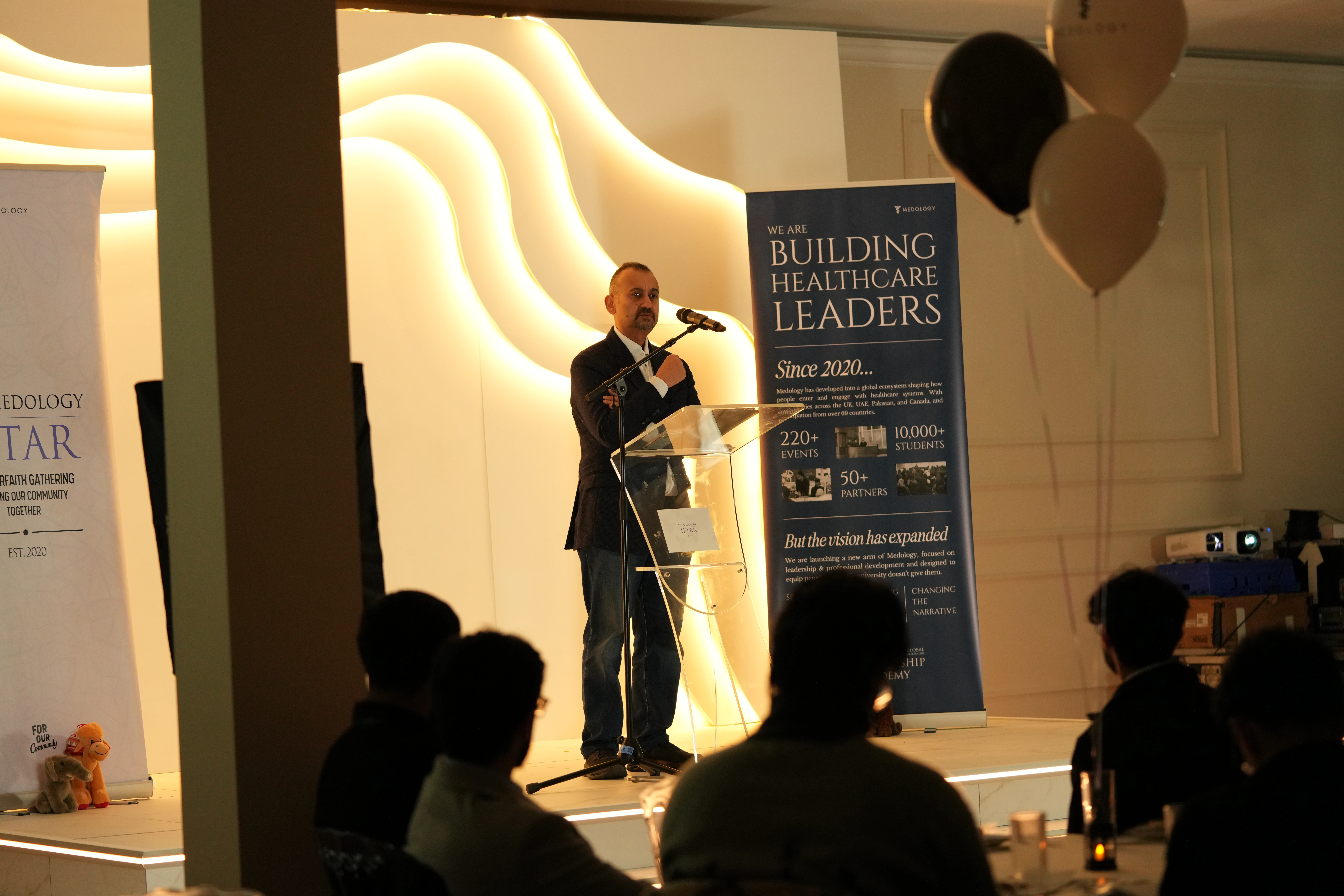
Dr. Masood's involvement with Medology began through an informal channel, a community group where he noticed something that stopped him. The founders were giving advice that was genuinely good. Unsentimental, well-researched and freely shared with anyone who needed it. No charge. No gatekeeping. And they were still students themselves.
He reached out to offer mentorship. He made one condition: that financial barriers would never become the reason a capable student could not access what Medology offered. That commitment has held, and in his view it is the thing that separates Medology from the broader industry that has grown up around healthcare education.
He tells the story of a student whose father, a doctor, had died when the boy was eight years old. He and his mother struggled financially. His ambition was to follow his father into medicine. When he came to Medology and explained he could not afford to participate, they gave him everything for free. He got in. He is now working towards the career his father had. Dr. Masood offers this not as a marketing point but as a description of what the thing is actually for.
What drives him
The conversation ends with Dr. Masood in a characteristically forward-facing mode. His view of what Medology should be doing next is not framed around scale for its own sake. It is about being braver. Doing things that have not been done before, taking chances that might not work, and learning from both outcomes. The students he is most excited about are the ones currently being handed real projects with real stakes and being trusted to lead them, not directed.
He holds several active board and advisory roles, is developing work in parts of the world he cannot yet discuss publicly, and is raising a large family alongside all of it. When asked what keeps him going, he does not reach for anything grand. He talks about curiosity. About the people around him. About a conversation that went somewhere he did not expect. About the fact that there is always more to learn, and that the day that stops being true is the day he will be worried.
It does not sound like a man who is anywhere near done.


.svg)
.svg)

.svg)