
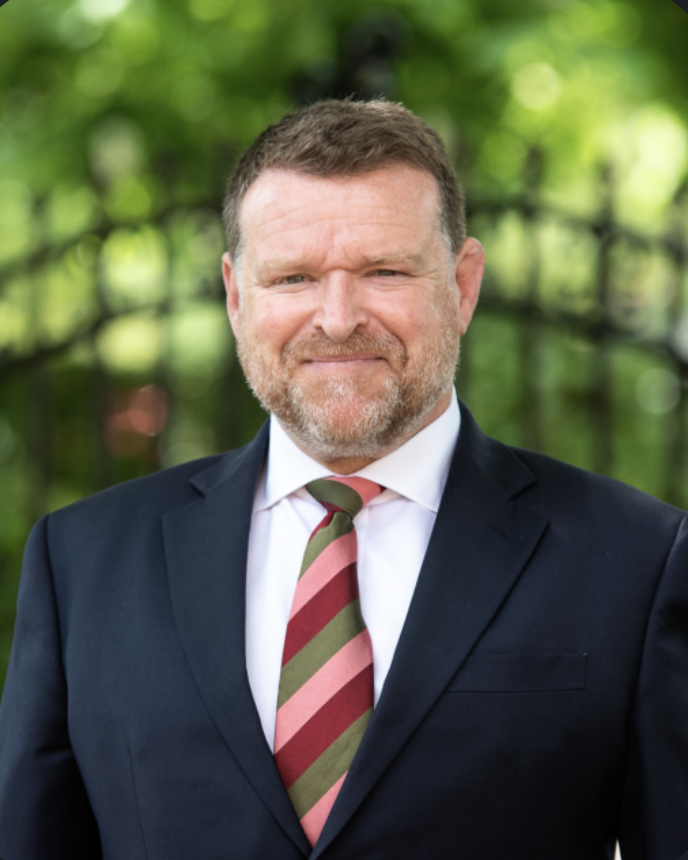
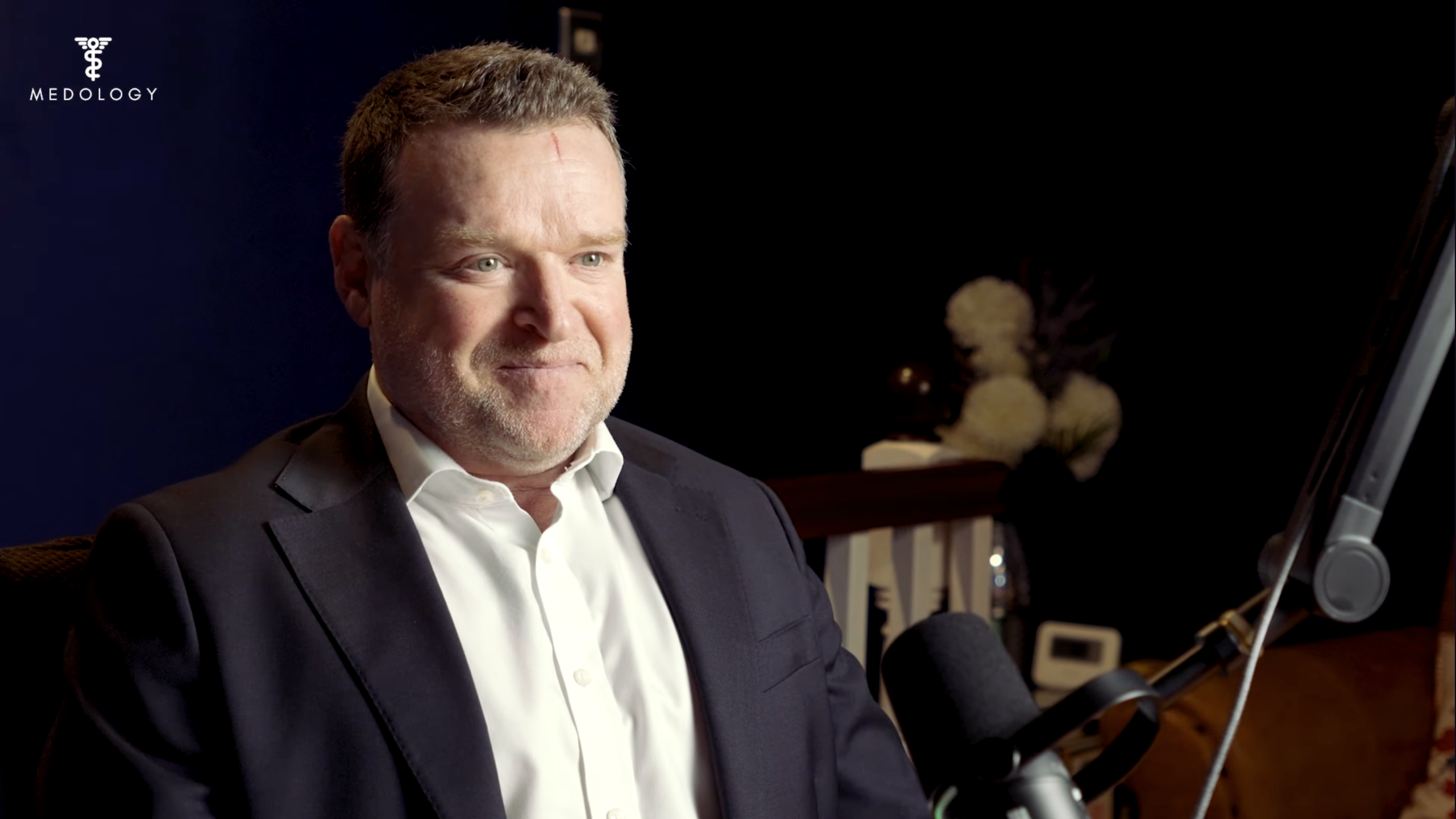
From the Green Beret to the classroom
The route from the Royal Marines to headmaster is not a common one. Mr. Wright's path was driven less by a plan than by a series of convictions about challenge, service and the transformational power of a good education.
He left school already drawn to teaching, having noticed something beyond the students: the staff, their variety, their collaboration, the sense of community that ran through the place. He spent a year in New Zealand teaching at a leading boarding school, then returned and announced he wanted to become a Royal Marine commando instead. His parents were unhappy. He did it anyway.
The training, nearly a year of it and one of the most demanding selection processes in any military, gave him the foundational principles he still leads by today: excellence, integrity, humility and courage. He also absorbed something more operational, a habit of planning so thoroughly and rehearsing so consistently that execution becomes almost secondary. In an environment where lives depend on preparation, thoroughness is not a preference. It is the baseline.
His father's story brought him back to teaching. A boy raised in genuine poverty in Bristol, given a free place at a grammar school, who went on to become one of England's youngest professors, then Vice-Chancellor of a major university, then head of a London medical school, and eventually knighted for his contribution to medicine. Mr. Wright understood what he was looking at: an entire life shaped by one good education. That was why he wanted to teach. Not for the career, but because he had seen what the thing could actually do.
Leadership found him gradually. Head of year, head of department, assistant head, deputy. He arrived at one of Britain's leading grammar schools in 2018 and left it consistently ranked among the top twenty schools nationally, with an eleventh-place ranking for student progress. He is proud of the numbers. He is prouder of what they represent.
What students everywhere are actually carrying
The public narrative about today's young people irritates Mr. Wright quite specifically. The caricature of teenagers as carefree, unmotivated and fragile bears almost no resemblance to what he has observed across eight years of daily contact with large numbers of them.
What he actually sees is students carrying enormous emotional loads, largely in silence. Pressure about grades, university choices, career direction, parental expectations, an uncertain global economy and a job market being reshaped by technologies that did not exist when the curriculum they are studying was designed. Many are simply trying to stay afloat. Many are doing so without telling anyone.
He is dismissive of the term "snowflake generation." His evidence is direct: these are the same students who went home during the COVID pandemic at the prime of their schooling, lost examinations they had worked towards for years, and came back more resilient than they left. Whatever the current generation lacks, fragility is not it.
The implications for anyone working alongside young people, whether as a teacher, mentor, parent or clinician, are straightforward. These students are not apathetic. They are anxious, and their anxiety is rational given the world they are entering. The response to rational anxiety is not more pressure. It is presence. Someone willing to sit with the weight of it and help a person think clearly, rather than adding to the noise.
This is not a problem particular to any one country or system. Whether a student is navigating their path in London, Lagos, Lahore or Los Angeles, the pressure is a version of the same thing. The credential has become the entire project, and the person pursuing it has often been left to manage the weight of that alone.
What most education systems are failing to teach
Mr. Wright is candid about the central paradox of contemporary schooling. Institutions are asked to prepare young people for a world changing faster than any curriculum can track, whilst doing so through assessment systems designed for a previous century that have barely evolved since.
The dominant model in most high-performing school systems rewards one thing above almost all others: the ability to absorb large volumes of content and reproduce it accurately under timed examination conditions. That is a genuine skill. It is also an increasingly narrow one. When Mr. Wright speaks to employers about what they are actually looking for in graduates, the conversation is almost never about grades. It is about collaboration, curiosity, resilience and communication. The skills that appear as soft extras on a school report turn out to be the difference between someone who can function inside a team and someone who cannot.
He raises artificial intelligence not as a distant concern but as a present reality. Students entering professional life in the coming decade who do not understand AI will be operating in a world they cannot properly read. The curricula being designed today for those students have not yet fully reckoned with that. This is as true for medical schools in Singapore or Nairobi as it is for those in Manchester or Melbourne.
None of this is pessimism. It is the honest critique of someone who has spent a career inside the system and still believes deeply in what education can do. You can see clearly what a structure is failing to do and still believe entirely in its purpose. That combination is probably the prerequisite for changing anything.
The leadership belief he had to unlearn
The most personally revealing moment in the conversation is Mr. Wright's account of the belief that changed most significantly across his career. He arrived in senior positions as a results-driven leader. League tables, progress data, grade outcomes. He drove hard towards those measures. It worked, in the narrow sense.
What shifted, gradually and then decisively, was his understanding of what the foundation actually was. Not results. Relationships. The pastoral culture. Whether every person in the building, student or staff member, felt known, valued and cared for as an individual rather than as a data point or a grade prediction.
His vision became precisely that: for every person who walked through the door to be known, valued and treated as an individual. The academic outcomes, he now believes, follow from that foundation. They are not the thing you pursue directly. They are what happens when the human conditions are right.
The relevance of this extends well beyond schools. Any organisation built around human beings, whether a hospital ward, a research team, a clinic or a healthcare institution, will underperform if it treats human connection as the thing you invest in once performance is secured. Build the connection first, and performance follows.
Look after your SHED
Near the end of the conversation, Mr. Wright shares a framework that has stayed with him since hearing it from a former student. Someone who left school, was rejected by his first-choice employer, kept asking, kept applying, and eventually spent a decade as one of that organisation's most successful people. His advice, distilled to an acronym: SHED. Sleep, Hydration, Exercise, Diet.
It sounds almost too plain to say in a conversation about leadership and education. Mr. Wright's point is that almost everything else, focus, resilience, emotional regulation, decision-making under pressure, degrades when the fundamentals collapse. The high-achieving students he watched struggle most were often simply not sleeping. The leaders he saw burn out were often simply not looking after themselves. The basics are not separate from the performance. At the foundational level, they are the performance.
Push yourself beyond your comfort zone so that when difficulty arrives, you have evidence you can get through it. Keep asking for what you want, because persistence in the face of rejection is a skill that compounds. Look after your SHED. And above all, make decisions from curiosity rather than from fear.
That last point is worth sitting with for any student anywhere in the world who is currently deciding which path to take, which opportunity to pursue, which risk is worth taking. Fear-based decisions cluster around safety: what will be least embarrassing if it fails, what will satisfy other people's expectations, what avoids the possibility of genuine regret. Curiosity-based decisions point somewhere else entirely, towards what actually interests you, what you would pursue even if no one was watching, what you would do if the outcome were genuinely open.
The distinction between those two modes is, Mr. Wright suggests, one of the most consequential choices a young person makes. It does not announce itself as a crossroads. It shows up quietly, across a hundred small decisions, over years. The people who look back with satisfaction are almost always the ones who leaned towards curiosity. The ones who look back with regret are usually the ones who let fear decide.


.svg)
.svg)

.svg)